Mix & Match Facial Filler — Your Way. Choose your brand, customize your look. 3–5 syringes starting at $1,600. June only. Book now
The wait is finally over, NYC. Come visit our new temporary home at Sola Salon (50 W 17th St). We can’t wait to see you!
Ready to fine-tune your look and feel your absolute best? Our interactive consultation is designed to make achieving your aesthetic goals effortless. Take our new treatment quiz
Botox Around the Eyes: Crow's Feet, Brow Lift, Symmetry, Side Effects & Everything You Need to Know
Table of Content
✕
Table of Content
The eye area is one of the most visible — and most delicate — places to treat with Botox. Our Botox treatments at Evolve Med Spa address everything from crow's feet and frown lines to drooping brows and asymmetry, delivering natural results that open up the eyes without erasing expression.
This guide covers every angle of Botox for the eye area: what it treats, how each technique works, the specific side effects to know about (including dry eyes and ptosis), how to correct asymmetry, what alternatives exist, and what to expect before and after treatment.
What Can Botox Treat Around the Eyes?
Botox has been FDA-approved for cosmetic use around the eye area since 2002. It works by temporarily blocking the nerve signals that cause the orbicularis oculi and surrounding muscles to contract — relaxing the skin above and smoothing dynamic wrinkles without affecting natural expression when dosed correctly.
In the eye area, Botox is used to treat:
Crow's feet — the lines that fan out from the outer corners of the eyes when you smile or squint
Frown lines ("11 lines") — vertical creases between the brows caused by the corrugator and procerus muscles
Glabellar lines — horizontal forehead furrows visible just above the nose and between the brows
Hooded eyes — excess skin drooping over the upper lid due to brow descent
Brow asymmetry — one brow lower than the other, making the eyes look uneven
Bunny lines — diagonal creases on the sides of the nose bridge near the inner eyes
Under-eye area — crow's feet extension, mild puffiness caused by orbicularis overactivity
Blepharospasm — involuntary eyelid twitching (FDA-approved medical use)
Strabismus (crossed eyes) and amblyopia (lazy eye) — FDA-approved medical treatments
Botox is FDA-approved for cosmetic treatment of crow's feet, frown lines, and forehead wrinkles. Medical uses (strabismus, blepharospasm) have separate FDA approvals. Under-eye and brow-lift applications are performed off-label by experienced injectors.
What Causes Wrinkles and Lines Around the Eyes?
The skin around the eyes is thinner than anywhere else on the face. It has less collagen density, fewer sebaceous glands (so less natural moisture), and is subject to tens of thousands of micro-movements every day — blinking, squinting, smiling, concentrating. That combination makes it the first place most people notice aging.
The primary causes of eye-area wrinkles:
Orbicularis oculi overuse — repeated squinting, laughing, and blinking crease the outer corners into crow's feet
Corrugator and procerus muscle activity — frowning and concentrating engrave the vertical "11" lines between the brows
Frontalis muscle descent — as the forehead muscle weakens with age, brows drop and create hooded eyes
Collagen and elastin loss — skin loses its ability to spring back from expression-related compression
UV damage — sun exposure degrades collagen and deepens existing lines faster
Sleep position — side sleeping can press the orbital area against a pillow, worsening crow's feet over time
What Types of Botox Eye Treatments Are Available?
Botox around the eyes is not one technique — it's a set of distinct injection protocols, each targeting different muscles and goals. Here's how each works.
Crow's Feet Treatment
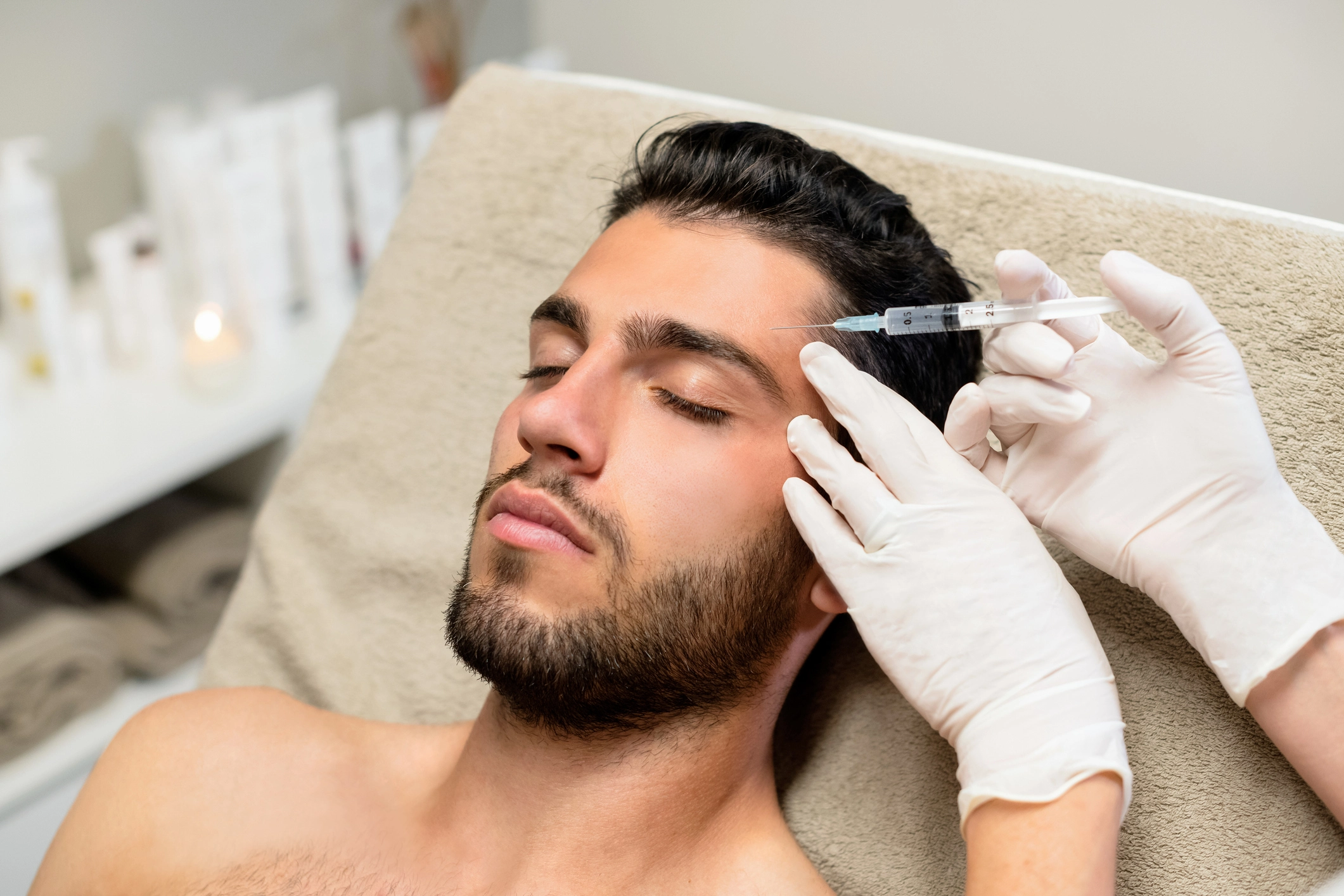
Crow's feet are treated by injecting Botox directly into the orbicularis oculi muscle at the outer corners of each eye. Three injection sites per side, four units each — 24 units total is the standard starting dose. Results soften the lateral lines while preserving natural smile expression.
Frown Lines & Glabellar Lines (Between the Eyes)
These are two related but distinct concerns. Frown lines are the deep vertical "11" creases between the brows, caused by the corrugator supercilii muscle. Glabellar lines are the horizontal forehead furrows visible on the glabella — the skin directly above the nose bridge.
Frown lines are treated at the corrugator and procerus muscles: one injection between the brows and two injections above each brow (five sites total), approximately 20 units. Glabellar lines receive 20 units across four to five injection sites on the forehead. Your injector places Botox above the outer brow arch to avoid brow ptosis — a key technique detail that separates experienced from inexperienced providers.
Non-Surgical Brow Lift (Eye Widening)
A Botox brow lift works by relaxing the brow depressor muscles — the corrugator and orbicularis oculi — that pull the brow downward. When these muscles are partially relaxed, the frontalis (the brow elevator) goes relatively unopposed, allowing the brow to lift naturally. The result: a more open, awake appearance without surgery.
A typical Botox brow lift uses 4–6 units per brow, often combined with 20–25 units for forehead lines. It takes 15–20 minutes, has no downtime, and results appear within 7–10 days. Compare this to surgical brow lift (endoscopic, coronal, or temporal approaches), which involves incisions, anesthesia, and 2+ weeks of recovery. For mild to moderate brow descent, the injectable approach delivers comparable aesthetic improvement.
Note: Botox brow lifts can raise the brow by approximately 4–6mm — meaningful lift for hooded eyes and brow asymmetry, but not a replacement for surgery when excess skin is significant.
Eye Symmetry Correction
Facial asymmetry is extremely common, especially around the eye area. Most cases are cosmetic — one brow sits slightly lower, creating the appearance of uneven eyes. Botox corrects this by injecting into the lower forehead and outer tail of the affected brow, relaxing the depressor muscles on that side and allowing the brow to rise to match the other.
Causes of eye asymmetry that Botox can address:
Uneven brow position from asymmetric frontalis/corrugator muscle activity
Mild ptosis (droopy upper eyelid) — Botox can slightly elevate the lid by relaxing the opposing muscle
Post-Bell's Palsy asymmetry — Botox helps balance the unaffected side while the affected side recovers
Botox is appropriate for mild to moderate asymmetry. Significant brow droop or excess eyelid skin causing vision obstruction typically requires blepharoplasty (eyelid surgery) for lasting correction. A Botox brow lift uses approximately 20–30 units for symmetry correction.
Under-Eye Botox
The under-eye area is more nuanced. Botox does not directly treat dark circles (a pigmentation issue) or deep hollowing (a volume deficit better addressed with filler). However, it can reduce the appearance of puffiness caused by overactive orbicularis oculi muscle activity and soften crow's feet that extend into the lower orbital area. This is an off-label application requiring an injector with precise anatomical knowledge of the lower orbital rim.
Who Is a Good Candidate for Eye Area Botox?
Eye area Botox is appropriate for:
Adults who have developed crow's feet, frown lines, or glabellar lines from repeated expression
Clients with mild to moderate brow drooping who want a non-surgical lift
People with noticeable but not severe eye asymmetry
Anyone in their mid-20s or older starting preventative treatment before lines become static
You may not be a good candidate if you:
Have significant excess eyelid skin that impairs vision — surgery is more appropriate
Have severe ptosis from levator muscle detachment — a surgical repair is needed
Are pregnant or breastfeeding
Have a neuromuscular disorder (ALS, myasthenia gravis, Lambert-Eaton syndrome)
Have an active skin infection near the injection sites
Have a known allergy to botulinum toxin or its components
Your provider will assess your facial anatomy, muscle strength, and skin laxity during consultation to determine whether Botox alone achieves your goal or whether combining it with filler or referring for a surgical evaluation makes more sense.
What Are the Side Effects of Botox Around the Eyes?
The eye area carries specific side effect considerations that differ from forehead-only treatment. Here is the full picture.
Common Side Effects (Expected & Temporary)
Bruising — the orbital area has dense vasculature; bruising is more common here than elsewhere
Swelling — usually resolves within 24–48 hours
Redness or mild tenderness at injection sites
Headache — most common in the first 24 hours
Asymmetric results at 2 weeks — can be corrected with a touch-up once full effect is visible
Eye-Specific Side Effects to Know
Ptosis (droopy eyelid) — Occurs when Botox migrates to the levator palpebrae superioris muscle that lifts the upper eyelid. This is the most common serious complication of upper-face Botox and is almost always caused by improper injection technique — placing the dose too low or too close to the orbital rim. Apraclonidine eye drops can provide partial relief by stimulating Müller's muscle. The effect is temporary and resolves as the toxin wears off, typically within 2–8 weeks.
Brow ptosis — Different from eyelid ptosis. Brow ptosis occurs when the forehead Botox over-relaxes the frontalis muscle, causing the brow to descend. The result is a heavy, tired appearance. Prevented by avoiding injections too low on the forehead and preserving frontalis activity above the orbital rim.
Dry eyes — A rare but recognized complication. The orbicularis oculi is responsible for complete eyelid closure during blinking. When partially relaxed by Botox, incomplete blinks reduce tear distribution across the ocular surface. This disrupts the lipid layer of the tear film, accelerating tear evaporation and triggering dry eye symptoms: redness, burning, light sensitivity, and blurred vision. Most cases resolve as the toxin wears off. Preservative-free artificial tears help manage symptoms in the interim.
Excessive tearing — Paradoxically, dry eyes can trigger reflex tearing as the eye attempts to compensate. Some clients notice watery eyes in the first few weeks post-treatment.
Double or blurred vision — Very rare. Can occur if toxin spreads to the extraocular muscles. Seek medical attention immediately if this occurs.
Severe Reactions — Seek Immediate Care If You Experience:
Difficulty breathing or swallowing
Severe facial asymmetry or sudden eyelid drooping
Rash, hives, or swelling around the mouth, lips, or throat (allergic reaction)
Eye pain or significant sensitivity to light
Inflammation of the cornea (keratitis)
Irregular heartbeat or chest tightness
Note: Most serious complications from eye-area Botox result from improper technique, not from the treatment itself. Always choose a licensed, medically trained injector with specific experience in periorbital anatomy. Avoid non-clinical settings.
How Can You Minimize Side Effects from Eye Area Botox?
Before Your Appointment
Stop NSAIDs (ibuprofen, aspirin, naproxen), vitamin E, fish oil, and alcohol one week prior — these increase bruising risk
Pause retinoids or tretinoin-based eye creams for a few days before treatment to avoid skin irritation
Disclose all medications — including anticoagulants, antibiotics, and allergy medications
If you have a history of dry eye syndrome, disclose this before treatment — your provider may adjust placement
Choosing the Right Provider
For eye-area Botox specifically, provider skill matters more than almost anywhere else on the face. The margins between a brow lift and brow ptosis, or between natural crow's feet softening and an expressionless stare, come down to millimeters and units.
Choose a licensed medical provider — physician, PA, NP, or registered nurse under medical supervision
Ask specifically about their experience with periorbital injections
Expect a full consultation including evaluation of your unique facial anatomy and muscle dynamics
Insist on a 2-week follow-up to assess results before any touch-up is performed
What Should You Do After Botox Around the Eyes?
Keep your head elevated for at least four hours — do not lie down
Do not rub, press, or massage the eye area
Avoid intense exercise for 24 hours — elevated heart rate increases bruising risk and can cause toxin migration
Skip eye makeup for at least four hours post-injection; avoid rubbing when you do apply
No facials, eyelash extensions, or eye treatments for 24 hours
Stay out of saunas, hot tubs, and direct heat for four hours
Avoid alcohol for 24 hours
If you use contact lenses, wait until any swelling fully resolves before reinserting them
Apply preservative-free artificial tears if you notice any eye dryness in the days post-treatment
Results begin appearing in 3–7 days and reach full effect at 10–14 days. Schedule any touch-up at your two-week follow-up, not before. Eye area Botox typically lasts 3–4 months for crow's feet and frown lines; brow lift results can last up to 6 months as those muscles tend to be treated more conservatively.
What Are the Best Alternatives to Botox for Eye Wrinkles?
Botox is the gold standard for dynamic eye wrinkles, but it is not the right solution for every concern or every person. Here are the most effective alternatives.
Dermal Fillers
While Botox relaxes the muscles that cause dynamic lines, dermal fillers at Evolve Med Spa restore lost volume. For the eye area, fillers are most effective under the eyes — addressing tear trough hollowing and dark circles caused by volume loss. Hyaluronic acid fillers like Juvederm and Restylane are the standard. Many clients benefit from both Botox (for crow's feet) and filler (for under-eye hollowing) in the same appointment.
Microneedling with PRP or PRF
For clients whose crow's feet and under-eye texture reflect broader skin quality concerns — thin skin, early crepiness, or pigmentation — microneedling with PRP stimulates collagen remodeling throughout the orbital area. Results are gradual but address the underlying skin quality rather than just relaxing the muscle.
Laser Treatments
Laser resurfacing targets surface-level crow's feet, sun damage, and skin texture around the eyes. IPL and laser facial treatments are effective for clients whose eye-area aging is driven by UV damage and pigmentation as much as muscle movement. Downtime varies by depth of treatment.
Chemical Peels
Superficial and medium-depth chemical peels address fine lines and texture around the outer eye area. They work best as a complement to Botox — the peel improves surface quality while Botox addresses the underlying muscle movement. See our chemical peel treatments for options.
Medical-Grade Skincare
For daily maintenance, retinoids stimulate collagen turnover and are among the most evidence-backed topical ingredients for fine line reduction. Hyaluronic acid keeps the periorbital skin hydrated and plump. Daily SPF is non-negotiable — UV exposure is the fastest accelerant of eye-area aging. Topical products extend the results of Botox and other treatments between sessions.
Surgical Options
When excess skin is causing hooding that Botox cannot lift — particularly when it impairs the visual field — blepharoplasty (upper eyelid surgery) or a surgical brow lift is the appropriate solution. Botox will not correct significant skin laxity; a consultation with a board-certified surgeon is recommended in those cases.
Frequently Asked Questions About Botox for the Eyes
How many units of Botox does the eye area need?
It depends on the treatment. Crow's feet: approximately 24 units (3 sites per side, 4 units each). Frown lines: approximately 20 units across 5 injection sites. Glabellar lines: 20 units. Brow lift: 4–6 units per brow plus 20–25 for forehead lines. Bunny lines: 5–10 units. Hooded eyes: 20–30 units. Your provider will assess your anatomy and recommend the appropriate dose.
Can Botox make my eyes look wider or more open?
Yes. A Botox brow lift relaxes the brow depressor muscles, allowing the frontalis to lift the brow naturally — widening the apparent eye aperture by 4–6mm. Treating crow's feet and frown lines also contributes to a more open, rested appearance. For clients with significant hooding, the effect will be limited and surgical evaluation may be more appropriate.
Can Botox fix uneven or asymmetrical eyes?
Botox can effectively correct mild to moderate brow or eyelid asymmetry. By injecting into the lower brow and outer tail of the lower side, the depressor muscles on that side are relaxed, allowing it to rise to match the other. Severe asymmetry from structural causes may require surgery.
Can Botox cause dry eyes?
It can, in rare cases. Botox in the orbicularis oculi reduces its ability to close the eyelid fully during each blink, which disrupts the tear film and can cause dryness, burning, and light sensitivity. Symptoms are temporary and typically resolve as the toxin wears off. Preservative-free artificial tears provide relief. Disclose any pre-existing dry eye condition to your provider before treatment.
Will Botox make my crow's feet disappear completely?
Botox significantly softens crow's feet at-expression and reduces their depth at rest. Very deep, static lines etched into the skin may be improved but not fully eliminated — a combination with laser resurfacing or microneedling often addresses residual texture. Results last approximately 3–4 months.
How long does eye area Botox last?
Crow's feet and frown lines typically last 3–4 months. Brow lift results can extend to 4–6 months. Clients who treat consistently often find their results last slightly longer over time as the muscles gradually adapt and contract less forcefully.
What's the difference between Botox for droopy eyelids and eye surgery?
Botox addresses drooping caused by brow descent — the brow falls and pushes skin over the upper lid, creating a hooded look. It cannot remove excess eyelid skin. Blepharoplasty (eyelid surgery) removes that excess skin permanently. If the droop is mild and brow-related, Botox works well. If it's significant or affecting vision, surgery is the right answer.
Is eye area Botox safe?
Yes, when performed by a trained, licensed medical provider. The eye area requires precision — complications like ptosis and dry eyes almost always trace back to improper technique. At a qualified med spa or physician's office, serious complications are rare.
Can I get Botox near my eyes if I wear contact lenses?
Yes, but remove your contacts before the appointment and wait until any swelling fully resolves before reinserting them — typically 24 hours. If you notice any increase in dry eye symptoms after treatment, wear glasses temporarily and use preservative-free artificial tears.
Ready to Refresh Your Eyes? Schedule a Consultation at Evolve Med Spa
Whether you're looking to soften crow's feet, lift a drooping brow, correct asymmetry, or explore what Botox can do for the under-eye area, our team will assess your anatomy and build a plan that delivers natural-looking, precise results. View our full Botox treatment menu and book your complimentary consultation today.
Let’s keep in touch! Sign up to our newsletter and receive 10% off your first treatment with us!
Explore
This website may convey general information related to medical conditions, their research, testing, and treatment, and other health care topics. Any such information is provided for informational purposes only. You should always consult with a doctor or other health care professional for medical advice or information about diagnosis and treatment.