Mix & Match Filler — Choose your brand, customize your look. As low as $475/syr. Book Now
Refer friends right in the Evolve app — you both earn $50 in credit. Refer now
Radiesse BBL: Lift, shape, and projection without surgery. Starting at $2,750. Book now!
The wait is finally over, NYC. Come visit our new temporary home at Sola Salon (50 W 17th St). We can’t wait to see you!
Ready to fine-tune your look and feel your absolute best? Our interactive consultation is designed to make achieving your aesthetic goals effortless. Take our new treatment quiz
When Should You Start Botox? A Decade-by-Decade Age Guide
Table of Content
✕
Table of Content
One of the most common questions we hear at Evolve Med Spa is some version of: am I too young? Or too old? Or somewhere in between and just not sure? The honest answer is that there is no single right age to start Botox. The right time depends on your skin, your goals, and whether you are trying to prevent lines from forming or soften ones that are already there. What we can tell you is that Botox is not a one-size-fits-all treatment, and the approach we recommend for a 24-year-old looks very different from what we recommend for a 52-year-old. This guide walks through each decade of life so you can understand what Botox can realistically do for you, what areas make sense to treat, and how to think about building a long-term plan. To learn more about the treatment itself, visit our Botox treatment page.
What Is Preventative Botox, and How Does It Actually Work?
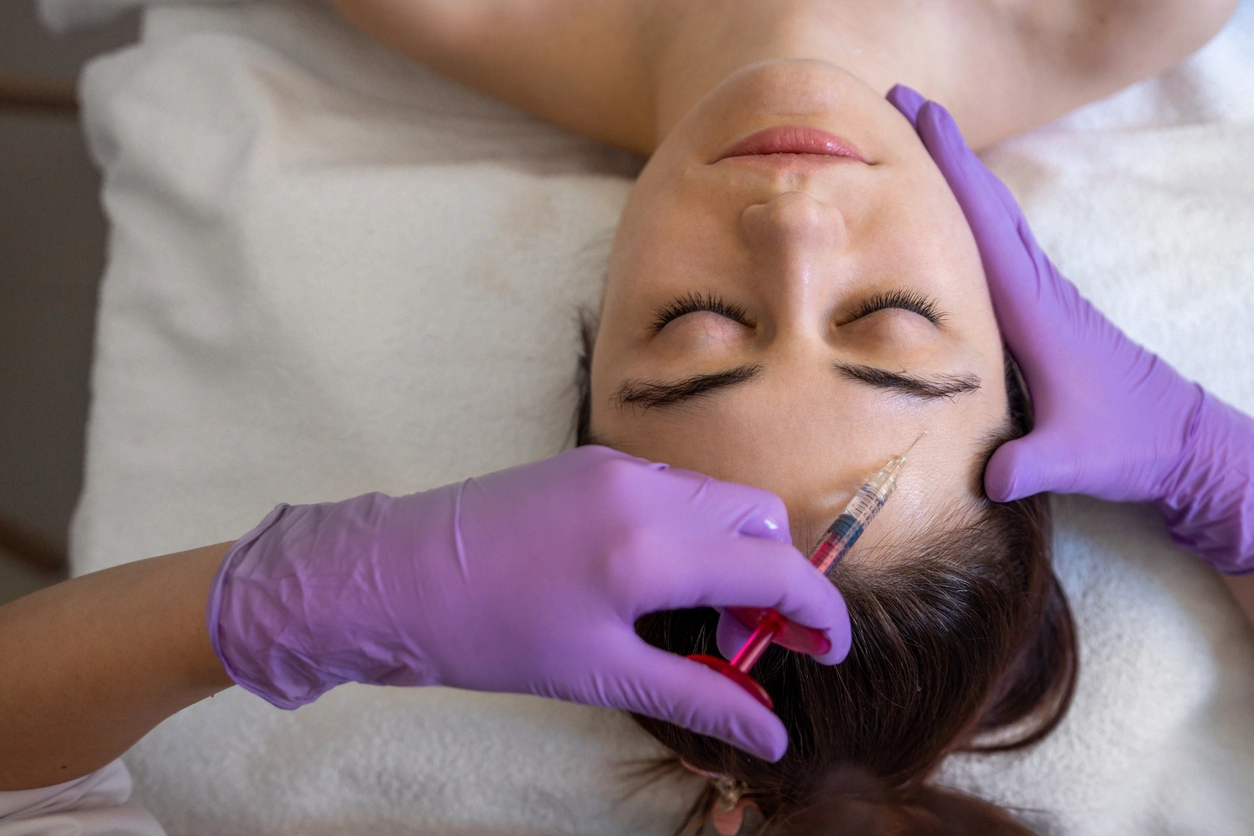
Preventative Botox refers to using small doses of a neuromodulator to relax facial muscles before they etch permanent lines into the skin. The logic is straightforward: wrinkles form because muscles repeatedly contract in the same pattern over years. Squinting creates crow's feet. Frowning creates the vertical lines between the brows. Raising your eyebrows creates forehead creases. Every time your face makes one of those expressions, the skin folds along the same crease. Over time, that crease stops bouncing back.
Botox interrupts that cycle. By partially relaxing the muscle, the skin never gets the chance to set a permanent line. The result is not a frozen face. Done correctly, preventative Botox preserves expression while reducing the mechanical stress that causes lasting creases.
The key distinction is between dynamic lines (lines that appear when you make an expression but disappear when your face relaxes) and static lines (lines that stay even when your face is completely at rest). Preventative Botox works best on dynamic lines, before they become static. Once a line is deeply set at rest, Botox alone may not fully erase it, though it can still significantly soften it.
Is Botox in Your 20s a Good Idea?
For most people in their 20s, the answer is: it depends on what you are seeing in the mirror. There is no rule that says you must start Botox at 25, and there is equally no rule that says you should wait.
In your 20s, you likely have dynamic lines but not static ones. The question is whether those dynamic lines are pronounced enough that you want to prevent them from eventually becoming permanent. Some people in their mid-to-late 20s are already developing noticeable forehead lines or deep frown lines simply due to strong muscle activity or very expressive faces. For them, starting conservatively now can make a meaningful difference a decade from now.
What Botox Looks Like in Your 20s
Approach: Baby Botox. Micro-doses that soften movement without eliminating it.
Common areas: Forehead, the elevens (glabellar lines between the brows), and sometimes early crow's feet.
Typical units: 10 to 20 units total. Often significantly less than what would be used for a corrective treatment.
Frequency: Every 4 to 6 months, or as needed based on how quickly your muscle activity returns.
The goal at this stage is not transformation. It is maintenance. Many clients in their 20s who start a conservative preventative routine see noticeably smoother skin in their 30s compared to peers who did not, simply because their skin never had the chance to set those lines.
If you are in your 20s and unsure whether you need Botox yet, a consultation is the most useful first step. Our injectors will look at your facial movement and tell you honestly whether you would benefit now or whether it makes more sense to wait a few years.
What Does a Good Botox Plan Look Like in Your 30s?
Your 30s are the most common decade for clients to start their Botox journey, and for good reason. Collagen production begins to slow, recovery time after facial movement increases, and those dynamic lines you noticed in your late 20s start lingering a little longer after you stop making an expression. You may also start noticing the first static lines, particularly on the forehead and around the eyes.
This is the decade where a consistent Botox routine tends to deliver the most visible return. Starting in your 30s keeps dynamic lines from deepening while still maintaining a completely natural appearance.
What Botox Looks Like in Your 30s
Approach: Standard preventative regimen. Full treatment of active movement areas.
Common areas: Forehead, glabellar lines (elevens), crow's feet. Some clients in their mid-to-late 30s begin adding the brow lift or lip flip.
Typical units: 20 to 40 units, depending on muscle strength and areas treated.
Frequency: Every 3 to 4 months to maintain results consistently.
One thing we often hear from clients in their 30s is that they wish they had started sooner, not because the results are not good, but because they can see in photos the years that certain lines were forming. That is not a reason for regret, but it does illustrate why the 30s are an optimal window to commit to a routine rather than treating episodically.
This is also the decade where clients often start combining Botox with other treatments. Light skin resurfacing, PRF facials, or a first consultation about dermal fillers for early volume loss can complement your neuromodulator routine and address the multi-dimensional changes that come with aging in your 30s.
How Does a Botox Strategy Change in Your 40s?
In your 40s, the conversation shifts from pure prevention to a combination of prevention and correction. Volume loss becomes more apparent in the cheeks and under the eyes. Static lines are more established. The neck and jawline may start to show the early effects of skin laxity.
Botox remains highly effective in your 40s, but it typically works best as part of a broader plan rather than as the only treatment. The goal is to address both the muscle activity that drives dynamic wrinkles and the structural changes that Botox alone cannot reverse.
What Botox Looks Like in Your 40s
Approach: Maintenance plus correction. Treating existing static lines while preventing new ones from deepening.
Common areas: All of the above, plus potential addition of platysmal bands (neck), brow shaping, and lip lines.
Typical units: 30 to 50 units, often more as muscle activity in some areas increases with age.
Frequency: Every 3 months is common; some clients find their results last slightly longer as muscles gradually weaken with repeated treatment over the years.
Many clients in their 40s begin adding dermal fillers to restore volume in the cheeks, temples, and under-eye area. Fillers and Botox address different aspects of aging and work well together: Botox handles the muscles, fillers handle the structure.
If you have been doing Botox consistently through your 30s, your 40s Botox experience will often feel easier and require fewer units than someone starting for the first time. That is one of the underappreciated compounding benefits of a long-term preventative routine.
Can Botox Still Make a Meaningful Difference in Your 50s and Beyond?
Yes, absolutely. The idea that Botox is only for prevention or only for younger patients is simply not true. Patients in their 50s, 60s, and beyond can see significant improvement in the softness and freshness of their appearance with neuromodulator treatment. The difference is that the approach needs to be thoughtful.
In your 50s and beyond, Botox is most effective when combined with other modalities that address the structural changes of aging that Botox alone cannot touch. Skin laxity, deep volume loss, and textural changes may benefit from additional treatments.
What Botox Looks Like in Your 50s and Beyond
Approach: Targeted relaxation of active muscles, combined with a broader anti-aging strategy.
Typical units: 40 to 60 or more, depending on areas treated and individual muscle strength.
Frequency: Every 3 months. Some patients find results come on more slowly and last slightly longer as muscle mass decreases with age.
For patients with significant skin laxity, treatments like Morpheus8 radiofrequency microneedling can address tightening and texture while Botox continues to manage muscle movement. The two work well together as part of a comprehensive anti-aging routine.
Starting Botox for the first time in your 50s is not too late. Results will be noticeable and meaningful, even if the approach looks different than it would for someone who started preventatively in their 30s.
How Many Units of Botox Will You Typically Need at Each Age?
Units vary based on the individual, the areas treated, and how strong your muscles are, but here is a general reference by age range:
Age Range
Approach
Common Areas
Typical Units
20s
Baby Botox / preventative
Forehead, elevens
10–20 units
30s
Standard preventative
Forehead, elevens, crow's feet
20–40 units
40s
Preventative + corrective
Full upper face, possible neck
30–50 units
50s
Corrective + maintenance
Full upper face, neck, lip lines
40–60+ units
60s+
Targeted maintenance
Problem areas, combined approach
Varies widely
These ranges are general estimates. Your actual unit count will be determined at your appointment based on your anatomy, muscle strength, and the areas you want treated. Some people with very strong muscles need more; people with lighter muscle activity may need fewer.
How Often Should You Get Botox as You Get Older?
Most patients see full results for 3 to 4 months, which is why quarterly appointments are the standard starting point for a maintenance routine. However, a few things shift as you age:
In your 20s and early 30s with baby Botox, some patients go every 4 to 5 months because the dose is smaller and the muscle recovers faster.
In your 30s and 40s on a standard regimen, every 3 months is the most common interval. Spacing too far apart means you spend part of the year with lines actively forming rather than being prevented.
In your 50s and beyond, some patients find results start to last a bit longer over time as muscles become slightly less active with repeated treatment over the years. Every 3 to 4 months is still typical.
One of the most important things we tell new patients is to not wait until lines are fully back before coming in. Letting the effect wear off completely between treatments means your muscles go back to full strength each time, which can work against the long-term softening effect of consistent treatment. A touch-up at 3 to 4 months is more effective than waiting until month six.
What Are the Signs That You Are Ready to Start Botox?
You do not need to reach a certain age. Here are the indicators we look for:
You notice dynamic lines that bother you when you look in the mirror, even if they disappear when your face is at rest.
You can see the beginning of static lines that stay when your face is relaxed, particularly on the forehead or between the brows.
Family history: if a parent developed deep forehead or frown lines at a young age, preventative treatment earlier may serve you better.
Expressive face: if friends or family have commented that you look stressed or angry when you are not, overactive glabellar muscles are often responsible.
You have done your research and want a subtle, natural result rather than a dramatic change.
The single best thing you can do if you are wondering whether Botox is right for you is book a consultation. Our injectors do not pressure anyone into treatment. We assess your face, ask about your goals, and tell you honestly what Botox can and cannot do.
What Is the Difference Between Preventative and Corrective Botox?
This comes up constantly and it is worth being direct about it. Preventative Botox is used on dynamic lines (lines that only appear with movement) before they become permanent. Corrective Botox is used to soften lines that are already static, meaning they exist even when your face is at rest.
Both approaches use the same product. The difference is in the goal, the dose, and what realistic results look like:
Preventative: Lower doses, focused on specific muscles driving early line formation. Results tend to look completely natural because the lines were never deep to begin with.
Corrective: Standard to higher doses, focused on reducing the visibility of existing lines. Results are meaningful but may not fully erase deep static lines, especially without pairing with other treatments like filler or resurfacing.
Regardless of where you are starting, the Dysport and Xeomin options we offer alongside Botox give us the flexibility to match the right neuromodulator to your specific anatomy and goals.
The takeaway: it is never too early and it is never too late. The right approach is the one that fits where your skin is right now.
Frequently Asked Questions About Botox by Age
At what age should I start getting Botox?
There is no universal right age. Most people start in their late 20s to early 30s for preventative treatment, or in their 30s to 40s when they begin noticing dynamic lines that bother them. The more useful question is what you are seeing on your own face, not what age you are.
Is 25 too young for Botox?
Not necessarily. If you have noticeable dynamic lines at 25, especially a strong frown line or forehead lines due to an expressive face, a conservative baby Botox treatment can make a real difference long-term. The key is using a small dose with a goal of softening movement, not eliminating it.
What is baby Botox?
Baby Botox refers to using smaller than standard doses of the product to soften muscle activity without fully relaxing it. The result is natural-looking softening rather than a frozen appearance. It is the most common approach for clients in their 20s who want preventative treatment while maintaining full expression.
Does starting Botox young mean you have to keep doing it forever?
No. Botox is not permanent and is not addictive. If you stop treatment, your muscles gradually return to full activity and lines will develop as they naturally would have. Some people find that after years of consistent treatment, muscle activity naturally reduces somewhat, which means they need less product over time. But stopping is always an option with no negative consequence beyond returning to your natural aging process.
Can Botox make me look older if I stop?
No. Stopping Botox simply allows your skin to return to the aging process it was on before treatment. It does not accelerate aging or make you look older than you would have looked without ever having Botox.
How long does preventative Botox last compared to corrective Botox?
The product itself lasts roughly the same amount of time: 3 to 4 months for most patients. What differs is the visual outcome. With preventative Botox, you may not notice as dramatic a visible change because lines were subtle to begin with, but the long-term benefit is that those lines never deepen into permanent ones.
What areas are most important to treat in your 30s?
The forehead, glabellar lines (the elevens between the brows), and crow's feet are the highest priority areas in your 30s. These are the zones where dynamic lines most commonly become static lines between the 30s and 40s with consistent facial movement.
Can I get Botox if I am pregnant or breastfeeding?
No. Botox is not recommended during pregnancy or breastfeeding. If you are pregnant or nursing and are interested in treatment, please wait until after you have finished breastfeeding and consult with your healthcare provider.
Ready to Build Your Botox Plan?
Whether you are curious about starting preventatively in your 20s or looking to refresh your routine in your 50s, our team at Evolve Med Spa will meet you exactly where you are. We have locations in New Jersey and Pennsylvania, and every treatment starts with an honest conversation about your goals. Book your Botox consultation at Evolve Med Spa and let us help you build a plan that makes sense for your face, your decade, and your long-term goals.
Our Locations
Find Your Nearest Evolve
14 clinics across New Jersey, New York, Maryland & Pennsylvania. Choose yours for hours, directions and treatments.
Let’s keep in touch! Sign up to our newsletter and receive 10% off your first treatment with us!
Explore
This website may convey general information related to medical conditions, their research, testing, and treatment, and other health care topics. Any such information is provided for informational purposes only. You should always consult with a doctor or other health care professional for medical advice or information about diagnosis and treatment.